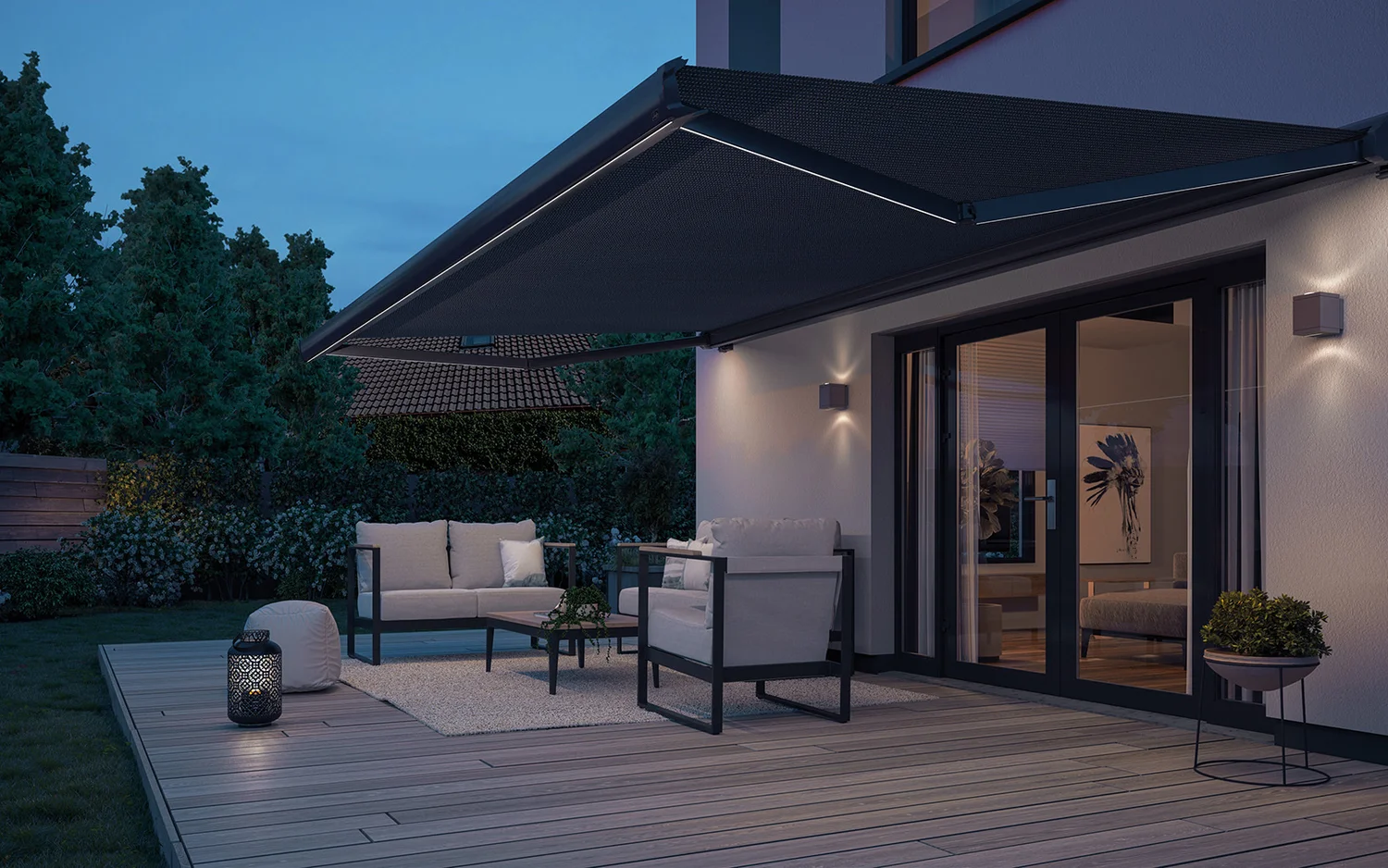
Most self-builders obsess over the kitchen layout, the glazing spec, and where the furniture will go. Then the patio gets left as a “we will sort it later” job. The problem is that outdoor comfort is not something you can bolt on at the end and expect it to feel seamless.
An awning works best when it is treated like part of the build. Plan it early and you can create a proper outdoor room, control glare through large glass doors, and get the fixing points and electrics in place while access is easy. At Halo External Shading, we supply made-to-measure WAREMA awnings and we see more projects baking them into the plan from the beginning.
Awnings are moving from “nice extra” to “day one decision”
Self-build homes often feature wide openings, big panes of glass, and bright interiors. These architectural features make beautiful living spaces, but solar control does become more important. When sun hits glass, heat builds up fast. And when you add a south or west facing patio into the mix, you can end up with a space that is too hot at the exact time you want to use it.
Awnings create shade where you need it on your patio, and they can also make the interior of your home feel more comfortable. By blocking the sun’s rays before heat reaches your glazing, an awning can reduce your need for air con, which in turn can lower your energy costs.
Why “plan it later” often leads to compromises
Adding shading after the build can still work, but it usually comes with trade-offs:
- You may not have the best fixing surface available where you need it
- Cable routes for motorised operation might be visible and awkward to install retrospectively
- Exterior finishes may need patching after drilling
- The awning size can end up dictated by what is easiest to fit, not what you actually need
If you include an awning in the outdoor plan early, you can integrate it cleanly. That’s one reason self-builders and architects are treating shading as part of the initial design, not an add-on or accessory.
Awnings help you design an outdoor room that is inviting and easy to use
Most self-build outdoor areas have a purpose in mind. Dining, lounging, a play space, a quiet corner near the kitchen doors… The right shading helps those plans work in real life.
With an awning in place, you can:
- eat outside without battling glare
- use the patio during the hottest part of the day
- keep doors open more often, without the room feeling like a greenhouse
- create shelter from light rain, depending on the system
Many self-builders looking for awnings in Suffolk want to have these conversations early, before paving, lighting, and landscaping decisions are locked in.
What should be designed in early for a self-build awning?
If you want your awning to look tidy and work well for years, these are the details worth planning while your project is still flexible.
Fixing points and structure
An awning needs to be fixed securely into a suitable substrate. If the external wall includes insulation, cladding, or unusual detailing, it is worth planning how the brackets will be supported before the final finish goes on.
Cable routes for motorised awnings
If you think you might want a motorised awning, plan the power route early, even if you are not choosing the exact controls yet. In a self-build, it is usually straightforward to run a discreet cable while walls are still open and exterior finishes are not final. It also helps you avoid visible trunking later on.
Placement and coverage
Your awning should be planned around how you will use the patio. A good way to start is by mapping the “activity zones” first. Dining areas need shade that covers the table when the sun is lower. Lounge areas often need a wider span so people are not shifting seats to escape glare. If you have bifold or sliding doors, we also check you still have clear access and enough head height.
When placement and coverage are planned early, you get shade where you need it, the proportions look right on the elevation, and you avoid the common problem of an awning that technically fits but does not properly cover the space.
Wind exposure
Open plots and elevated sites can be more exposed; your shading choice should reflect that. Some locations may benefit from a more permanent structure like a pergola.
How to choose a WAREMA awning for your self-build
We supply a wide range of WAREMA awnings. Here are some of our most popular models and where they might fit into your self-build plans.
Patios and bifold doors: Terrea cassette awnings
If you want a neat and tidy look when your awning is not in use, a cassette model is a great choice. The cassette protects the fabric and moving parts when retracted, which helps keep everything in good condition over time.
Terrea cassette awnings are great for outdoor dining areas, or installed over patios linked to bifold or sliding doors.
Larger patios and more exposed gardens: Perea pergola awnings
Some self-build plots are open and windy. Some patios are simply bigger. In those cases, a pergola-style awning can be a better fit than a standard arm awning.
Perea pergola awnings offer high levels of wind stability, with shade and protection from wind and rain. Optional extras such as LED lighting, heaters and valances can be added for year-round comfort.
Tackling heat at the source: Climara over-glass conservatory awnings
Climara over-glass awnings are designed to absorb most of the sun’s rays before they reach the glass, helping keep your space cooler and more comfortable in warm weather. They can suit different roof shapes and can shade up to 30m² with one system depending on the model.
Sheltered control of glare and privacy: Climara under-glass awnings
If you want shading beneath a glass roof, an under-glass system keeps the fabric and parts more protected.
This option suits self-build projects where clean external lines are a priority. You can install them in glass rooms or spaces used as home offices where glare control is important.
Shade for smaller outdoor spaces: Balcony awnings
Not every self-build has a huge patio. Some projects include balconies or compact terraces. Balcony awnings can suit smaller outdoor spaces, with options such as wireless or app control depending on the setup, and possible upgrades like a drop-down valance, LED lighting or heaters depending on the model.
The simplest way to get it right from day one
If you are early in your self-build planning, start with three questions:
- Where do you want shade, and at what times of day?
- Is your patio exposed to wind?
- Do you want motorised control from the start?
From there, it becomes much easier to choose between cassette, pergola, and glass-roof solutions.
Make the outside part of your design, not an afterthought
Awnings work best when they are planned as part of an outdoor room. You get cleaner detailing, easier electrics, better coverage, and a patio that is enjoyable to use more often.
If you are looking for an awnings provider and want advice on WAREMA awnings or awnings in Suffolk, speak to us at Halo External Shading. We can help you match the right system to your glazing, layout, and exposure, while your project is still at the perfect stage to integrate it neatly.